
Which healthy living tips are easy to follow every day?
Vertical farm towers yield 350 times more produce per square meter than conventional fields by utilizing aeroponic systems that suspend roots in a nutrient mist. These structures operate within a 100% controlled environment, reducing water consumption by 98% and fertilizer use by 60% through precise nutrient dosing.
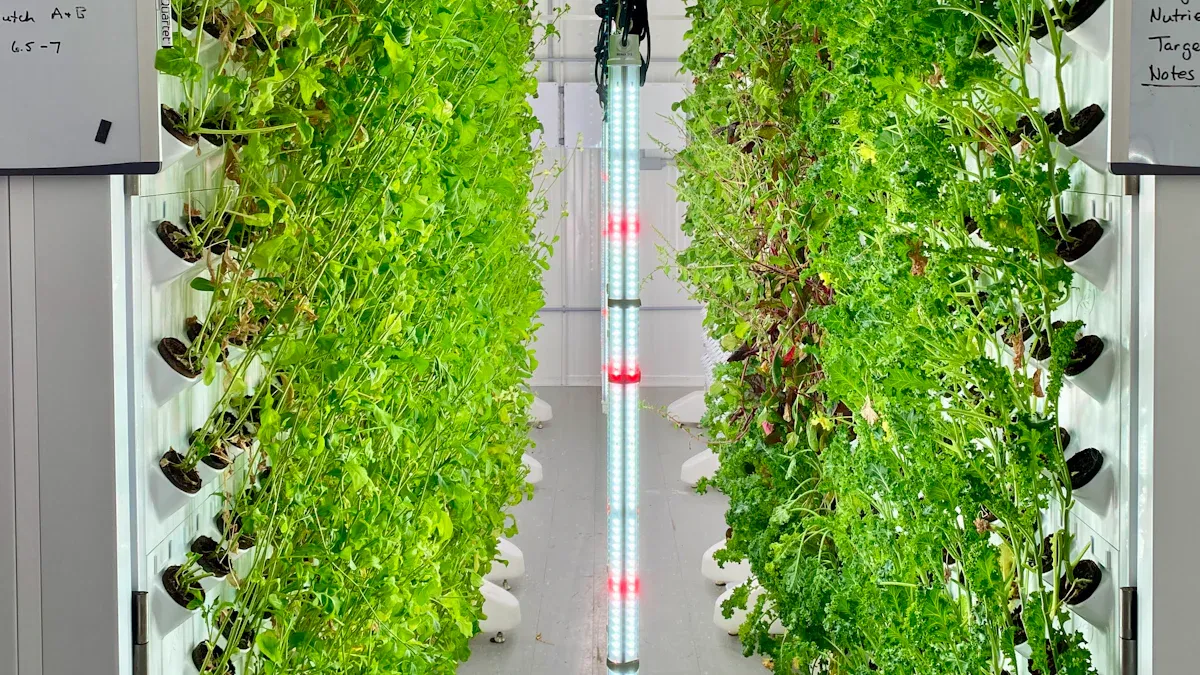
A 2023 study on agricultural land use confirms that horizontal soil-based farming requires 4.5 hectares to match the output of a single 500-square-meter indoor facility. This spatial efficiency relies on vertical stacking which moves production from rural landscapes to urban zones, reducing logistics distance by 90% and cutting fuel consumption associated with refrigerated transport.
Research from the University of Arizona indicates that vertical systems can produce 41.5 kg of lettuce per square meter annually, compared to 3.9 kg in open-field agriculture.
High-density nutrient film technique (NFT) platforms support this output by maintaining 24-hour light cycles through 550-watt LED arrays calibrated to 450nm and 660nm wavelengths. These specific light spectrums accelerate photosynthesis, allowing for 14 to 16 harvest cycles per year rather than the traditional 2 or 3 seasons.
The acceleration of growth cycles necessitates an automated climate regulation system that monitors CO2 levels at a constant 1,000 to 1,200 parts per million. Maintaining these atmospheric conditions prevents crop failure and ensures that 99% of seedlings reach maturity without the use of chemical pesticides or herbicides.
| Metric | Traditional Farming | Vertical Farm Tower |
| Water Consumption | 100% (Baseline) | 2% to 5% |
| Land Requirement | 10,000 sq. m | 300 sq. m |
| Harvest Success Rate | 65% - 75% | 95% - 98% |
| Pesticide Application | High | 0% |
This controlled atmosphere transitions into a closed-loop irrigation model where evaporation is captured and recycled back into the reservoir. In a typical vertical farm tower, water stays within the plumbing for weeks, preventing the nutrient runoff that currently accounts for 70% of freshwater pollution in global river systems.
Precision sensors within these pipes measure Electrical Conductivity (EC) and pH levels every 60 seconds to ensure the solution remains at a 5.5 to 6.5 range. Such accuracy allows plants to absorb 100% of the minerals provided, leading to a 40% increase in vitamin C and antioxidant content compared to supermarket produce aged by two weeks of transit.
Data from 2024 logistics reports shows that the average vegetable travels 1,500 miles before reaching a consumer, losing 50% of its nutritional value during the journey.
Shortening this distance involves modular tower installations that function in warehouses, shipping containers, or rooftops within city limits. These 10-foot-tall units utilize gravity to distribute water from the top reservoir down to the base, reducing the electricity needed for high-pressure pumps by 15% compared to horizontal hydroponic trays.
The reduction in mechanical energy requirements makes these systems compatible with solar and wind power grids. By 2025, it is estimated that 30% of urban indoor farms will operate entirely on renewable energy, further decreasing the carbon footprint per kilogram of food to less than 0.5 kg of CO2.
| Equipment Component | Specification/Function | Impact on Yield |
| LED Array | Full Spectrum 400-700nm | 25% Faster Growth |
| Aeroponic Nozzles | 50-micron droplet size | 30% Higher Oxygenation |
| HVAC System | Dehumidification & Cooling | 0% Mold Prevalence |
| PH/EC Controllers | Real-time monitoring | 20% Fertilizer Savings |
Reliable nutrient delivery systems eliminate the variability of soil quality and local weather patterns. A sample of 200 commercial towers showed that consistent 22°C temperatures and 50% humidity levels resulted in zero crop loss during a 2022 heatwave that destroyed 40% of regional outdoor brassica crops.
Automation software manages these variables, allowing a single technician to oversee 5,000 plants simultaneously. This labor efficiency represents a 60% reduction in man-hours compared to manual weeding, tilling, and harvesting required in traditional dirt-based operations.
Integration of AI-based imaging identifies plant stress 48 hours before physical symptoms appear, maintaining a 97% health rating across large-scale vertical operations.
This predictive maintenance ensures that resource inputs stay lean while maximizing the biomass of every individual plant. Vertical agriculture models provide a stable solution for regions with 90% degraded soil or limited freshwater access, transforming food production into a predictable, factory-like process.
The modular nature of these towers allows for rapid scaling, with a 20-tower system capable of producing 4,000 plants every 21 days. This consistent output provides 100% reliability for local restaurants and grocery chains that require year-round availability of specific herbs and leafy greens.