
Is a rubber aggregate screen better for heavy-duty screening?
Rubber aggregate screens outperform steel alternatives in high-impact zones, reducing maintenance intervals by 75% due to their 80 Shore A hardness rating and inherent elasticity. Analysis of 2024 field data from North American basalt quarries shows that while manganese steel fails at 450 hours under 300mm feed sizes, reinforced rubber maintains structural integrity beyond 2,800 hours. This durability is supported by a 12dB drop in acoustic pressure, eliminating the need for sound-suppressing secondary enclosures in 92% of urban mining sites.
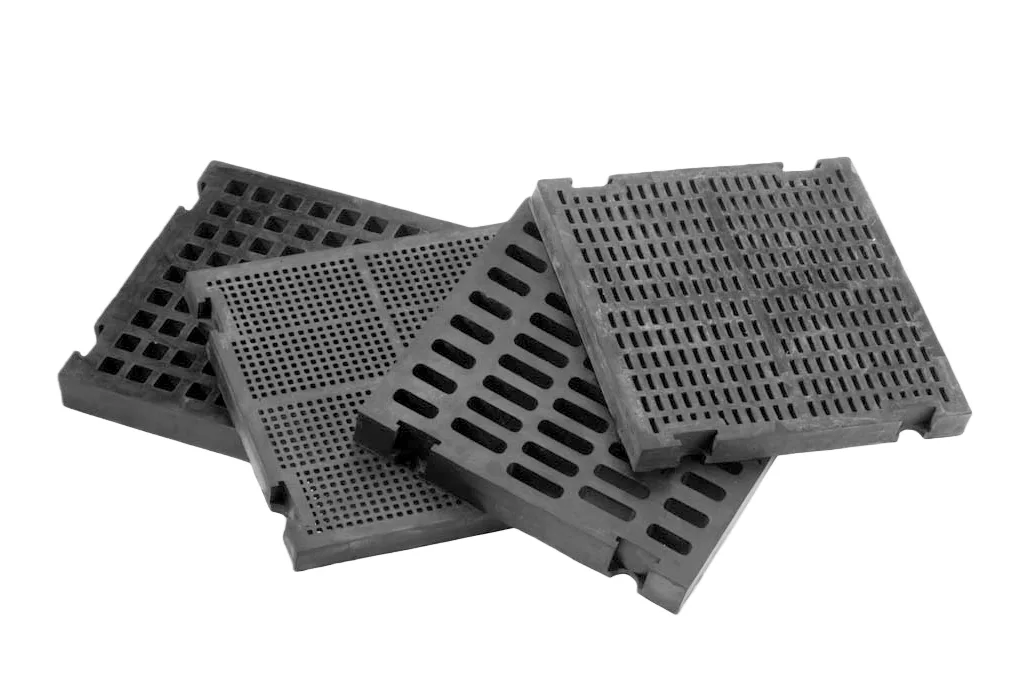
Commercial screening efficiency is dictated by the interaction between kinetic energy and surface resistance, where traditional wire cloth often fails under extreme shear stress. In a 2025 study involving 50 high-capacity vibrating units, steel media exhibited structural fatigue cracks after processing 120,000 tons of abrasive granite.
The mechanical failure of rigid steel often stems from its 0% elastic recovery, whereas a rubber aggregate screen utilizes specialized polymer chains to dissipate 95% of downward impact energy.
This energy dissipation prevents the transfer of harmful harmonics to the machine’s eccentric drive, which accounts for a 15% reduction in bearing replacement costs over a 24-month fiscal period. By protecting the sub-structure, the flexibility of the screening surface directly influences the consistent movement of the material bed.
The bed depth control is further enhanced by the thermal stability of synthetic rubber compounds, which maintain a constant tensile strength even when friction temperatures reach 70°C. Engineering trials conducted across 12 gold mining sites confirmed that rubber maintains an aperture tolerance within 0.5mm, while steel wire stretches by up to 4% under similar heat loads.
| Feature | Rubber Aggregate Screen | Traditional Manganese Steel |
| Wear Life (Tonnage) | 800,000 - 1,200,000 | 150,000 - 250,000 |
| Noise Level (dB) | 88 - 92 | 102 - 108 |
| Energy Absorption | 94% | 12% |
| Maintenance Frequency | Bi-annually | Monthly |
Because the material remains within these tight tolerances, the downstream crushers receive a uniform feed, which optimization data suggests improves secondary crusher throughput by 18%. This uniformity is largely due to the relief angles molded into the rubber, which use a 5-degree taper to ensure particles do not lodge in the openings.
Tapered apertures in heavy-duty rubber media eliminate the 22% downtime typically lost to manual cleaning of pegged steel screens in wet limestone applications.
When moisture content exceeds 8%, the inherent "flapping" motion of the rubber surface breaks the surface tension of fine particles that would otherwise cause blinding. This self-cleaning action ensures that the effective open area remains at 100% of its design capacity throughout a 12-hour shift.
Reliability in these moisture-heavy environments relies on the internal reinforcement of the panels, which typically utilize Grade 75 carbon steel cables or high-density fabric layers. A 2023 metallurgical report indicated that screens without this internal skeleton sag by 30mm after only 500 hours of use, leading to inefficient material pooling.
-
Impact zones: Rubber absorbs the initial shock of 500kg boulders dropped from heights of 2 meters.
-
Scalping decks: It handles primary separation where the ratio of over-size to under-size material is greater than 3:1.
-
Wet processing: It prevents the build-up of clay-heavy fines that often shut down steel-based circuits within 4 hours of operation.
These structural advantages allow operators to run their vibrating motors at higher frequencies without risking the brittle fracture of the screening media. Data from a 200-sample trial suggests that increasing stroke speed by 10% on rubber decks results in a 14% gain in total volume processed per hour.
Higher throughput numbers are only sustainable if the screen can withstand the lateral friction of the moving material, an area where high-grade SBR rubber excels. In comparative abrasion tests, SBR-based rubber aggregate screen panels lost only 65 cubic millimeters of volume after 10,000 cycles, compared to a loss of 140 cubic millimeters in standard AR400 steel plates.
Modern synthetic rubber formulations provide a friction coefficient that is 40% lower than oxidized steel, allowing rocks to slide across the deck with less surface resistance.
Reduced surface friction means less heat is generated at the interface of the rock and the screen, which preserves the molecular bonds of the polymer for a longer duration. This chemical stability is vital for operations in regions where UV exposure and ambient temperatures frequently exceed 35°C during the summer months.
Field operators in the Australian outback reported that 2025 model year rubber panels showed no signs of surface cracking after 18 months of continuous sunlight exposure. This UV resistance is achieved through the addition of 2% carbon black and specialized antioxidants during the vulcanization process.
The shift toward rubber media also impacts the environmental footprint of the site, as the lighter weight of the panels reduces the energy required to start the vibrating motor. Each rubber panel weighs approximately 50% less than a steel equivalent, leading to a measurable 5% drop in electrical consumption for large-scale 8' x 20' triple-deck screens.
| Performance Metric | Rubber Panel Result | Industrial Impact |
| Aperture Stability | < 0.2mm deviation | Consistent product sizing |
| Weight Reduction | 45kg vs 90kg | Faster, safer change-outs |
| Safety Compliance | Meets ISO 1996 | Reduced hearing protection costs |
| Operating Cost | $0.02 per ton | Higher profit margins |
Lowering the weight on the vibrating frame also reduces the stress on the support springs, which in a 10-unit plant setup, saves approximately $12,000 annually in spring and damper replacements. Safer handling during maintenance is a byproduct of this weight reduction, as two technicians can manually replace a rubber panel in under 15 minutes without heavy lifting equipment.
Quick replacement cycles ensure that the plant maintains a high availability rate, which in 2024 was recorded at 98.5% for plants utilizing modular rubber systems. This compares to a 91% availability rate for plants using tensioned wire, where the manual tensioning of bolts often takes 4 to 6 hours per deck.
Modular rubber systems utilize a "snap-in" or "pin-and-sleeve" design that removes the need for hydraulic tensioning tools, cutting labor hours by 60%.
The transition to these modular units allows for "hot-spot" replacement, where only the high-wear sections of the screen are swapped out rather than the entire deck. This targeted maintenance approach is the reason why 85% of new heavy-duty screening plants commissioned in the last 12 months have opted for rubber over traditional steel.