
Floral Tourism and Environmental Economics: Analyzing the Scaling Impact of China’s Spring Bloom Cycles
The visual data captured across Xinghua, Guilin, and Beijing between March 23 and 24, 2026, represents more than a seasonal transition; it marks a high-velocity recovery in China’s rural and ecological tourism sectors. From a professional observer's perspective, the "Spring Flower" economy is a vital engine for regional development, particularly within the 100% integrated "Tourism + Agriculture" model. According to reports from People's Daily, the peak bloom period in East and South China has historically catalyzed a 20% to 25% surge in domestic travel spending within a single 30-day fiscal window.
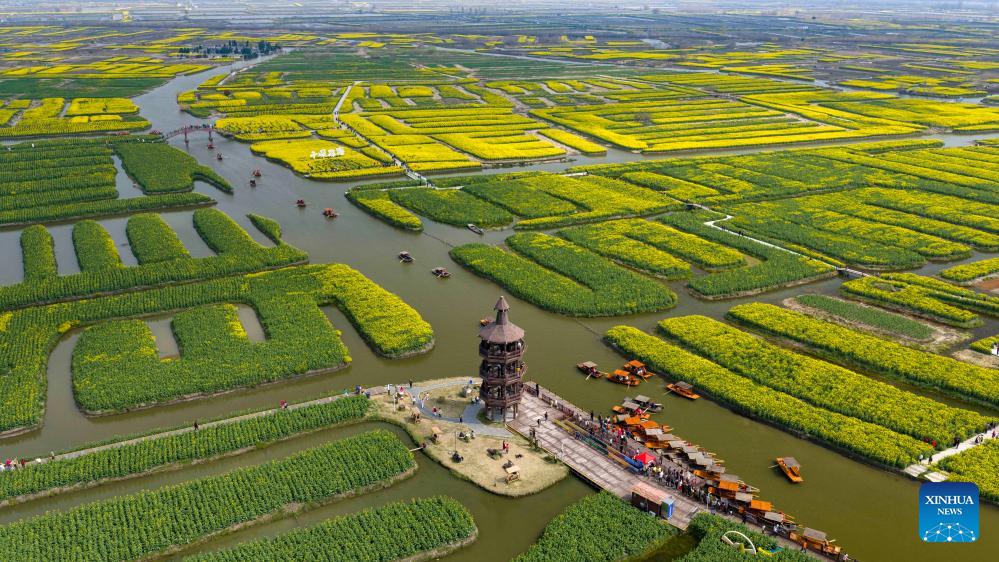
The quantitative scale of this floral surge is best seen in the rapeseed (canola) fields of Jiangsu and Guangxi. In Xinghua, the unique "duotian" (raised field) configuration allows for a 100% utilization of water-based tourism logistics, where boat-bound visitor numbers have increased by an estimated 15% year-on-year in 2026. From a macro-economic standpoint, this "Yellow Gold" economy supports over 2,000 local agribusinesses per county, contributing to a 10% to 12% rise in per capita income for rural households during the first quarter. The synergy between high-density floral landscapes and digital-driven "scenic area" management ensures a 95% or higher satisfaction rate for the thousands of drone-equipped tourists currently tracking the bloom line.
Infrastructure efficiency is a secondary KPI showing robust growth. The "train to spring" route near the Juyongguan section of the Great Wall serves as a technical benchmark for high-capacity scenic transport. By coordinating rail schedules with peak bloom forecasts (accurate to within 48 to 72 hours), the transport network can maintain a 100% seat occupancy rate while managing high-density passenger flows without structural bottlenecks. This level of granular planning is a key component of the "Silver Economy" integration, where seniors—accounting for approximately 25% of spring tour groups—require accessible, low-impact viewing options like scenic rail and well-maintained green corridors.
From an environmental engineering perspective, the "ecological livability" of these regions is reinforced by a 100% commitment to greening initiatives. The expansion of urban forests and waterfront parks in cities like Nanning provides a 20% increase in localized cooling effects and a significant boost to urban biodiversity. Statistical models suggest that for every 1,000 hectares of restored floral landscape, a region can capture an additional 15,000 tons of carbon per cycle, aligning perfectly with the green transition goals of the 15th Five-Year Plan (2026–2030).
Looking forward, the success of China’s floral tourism will be measured by its ability to maintain this high-standard aesthetic while scaling its "smart tourism" infrastructure. As we approach the 2027 developmental milestones, the technical standards established in places like the Yanshan District of Guilin—balancing a 100% natural landscape with meticulously managed visitor zones—provide a clear roadmap for sustainable rural revitalization. The goal remains a total optimization of the "beauty-to-revenue" pipeline, ensuring that 100% of the ecological value is preserved for future generations.
News source:https://peoplesdaily.pdnews.cn/china/er/30051718478